Apple Silicon as local AI: Apple bets on the end of the RAM crisis and plans M7 with 1.5 TB of RAM
[13:52 Tue,14.July 2026 � by Thomas Richter] ���
According to insider Mark Gurman, Apple has big plans for the next generations of its M-chips: The M7 Ultra, targeted for 2028, is expected to feature up to 1.5 TB of memory and, as part of an intensified AI push, offer the NPU computing power of an Nvidia Blackwell GPU. Furthermore, Apple is changing its previous product policy by skipping high-performance M-variants and accelerating the generational sequence.
M6 without Pro, Max, and Ultra versions
Currently, the M5, released in October, is on the market with M5 Pro and Max (no Ultra) variants, which were released in March 2026. According to Gurman&s rumors, Apple is then expected to introduce a base version of the new M6 in the fall of 2026, intended for more affordable Macs. Unlike in the past, this will not be followed by more powerful Pro, Max, and Ultra versions—these will simply skip the M6 generation and only reappear with the M7. According to Gurman, Apple wants to focus entirely on the development of improved neural processing for AI applications in the M7.
According to older rumors, the M5 Ultra will be released in a new Mac Studio with up to 768 GB of memory, presumably at the end of 2026 or early 2027 at the latest. Thanks to the accelerated development, the base version of the M7 is expected to appear in the first half of 2027—just 6 months after the M6—with the M7 Pro and M7 Max variants to follow at the end of the year.
M7 Ultra: 1.5 TB for local AIs
Apple seems to expect the memory crisis to subside by 2028, as that is when the M7 Ultra is set to hit the market, which can be equipped with up to 1.5 TB of unified memory—double that of the M5 Ultra (currently, Apple no longer offers Mac Studio model variants with 128/256/512 GB due to the memory crisis).
At current memory prices, a 1.5 TB model would be prohibitively expensive (for perspective: 96 GB of Samsung DDR5 RAM, which was originally available for 650 euros, currently costs 4,500 euros). Thanks to NPU optimization, the computing power of the M7 Ultra for AI applications is expected to be on par with Nvidia Blackwell GPUs. However, such a top configuration (in terms of memory, computing power, and price) makes sense even with lower RAM prices primarily for local AI models—a market that promises enormous growth potential.
Current Mac Studio
Apple focuses on local AI
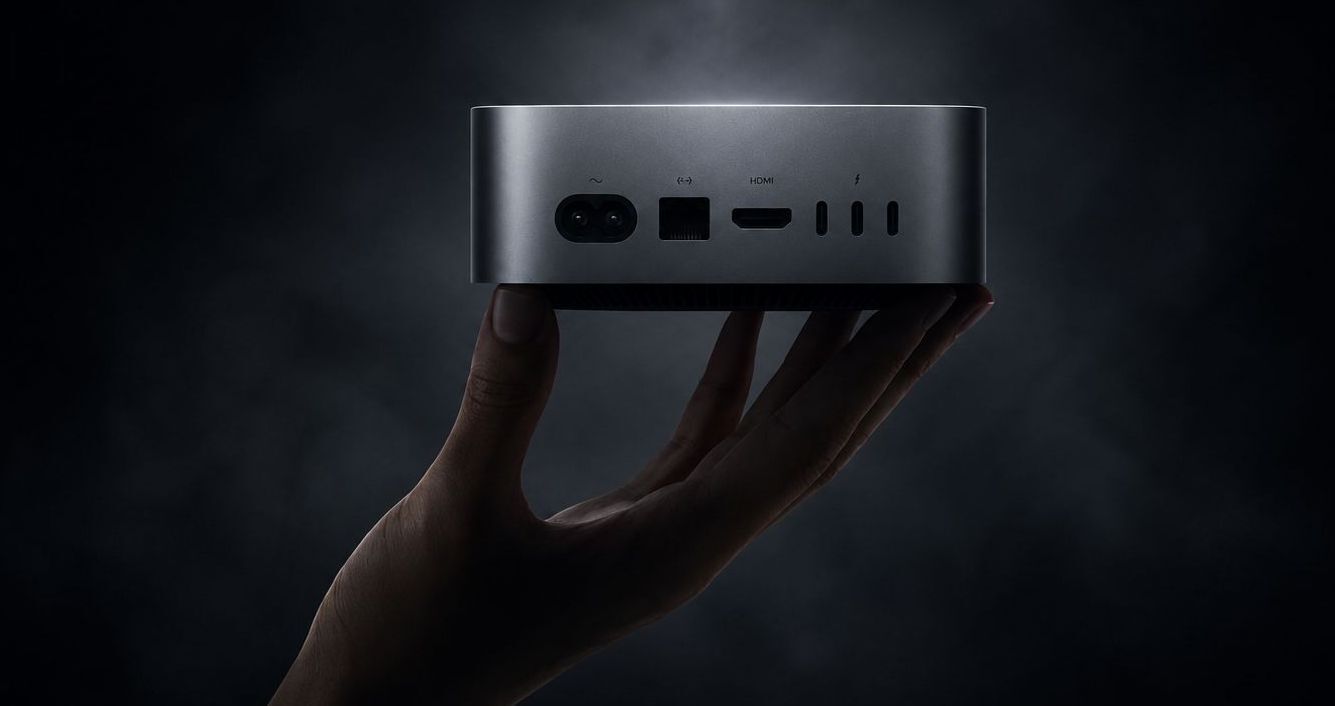
So far, users have often relied on DIY solutions to achieve the necessary computing power for local AI models relatively inexpensively by using multiple Mac Minis connected via Thunderbolt. Such local variants have the advantage over cloud solutions of costing almost nothing to use and ensuring that data does not leave the user&s own hardware. As part of this development, Apple&s first AI-specialized server is expected to appear in 2029, which, with its adapted rackmount format, would also become a competitor to Nvidia on a large scale in terms of AI. Before that, in 2028, the M8 (codename Soko), manufactured using the 1.4 nm process and further optimized for AI, as well as the high-end "Cardinal" platform for particularly powerful Macs, are expected to be released.
Apple Mac Mini as an AI cluster
Apple Silicon Roadmap
Chip Model
Release
Technical Details
M6 (Base)
Fall 2026
For entry-level Macs; no Pro, Max, or Ultra variants
M5 Ultra
Fall 2026
Mac Studio; up to 768 GB memory
M7 (Base)
1st Half 2027
Base configuration of the M7 series
M7 Pro / Max
End of 2027
High-end performance variants
M7 Ultra
2028
Up to 1.5 TB memory; Nvidia Blackwell AI performance