The Blackmagic PYXIS 12K is now also certified for Netflix productions – joining the list of approved cameras alongside numerous other Blackmagic models (including the URSA Mini Pro 4.6K G2, URSA Mini Pro 12K OLPF, URSA Cine 12K LF, and URSA Cine 17K 65).
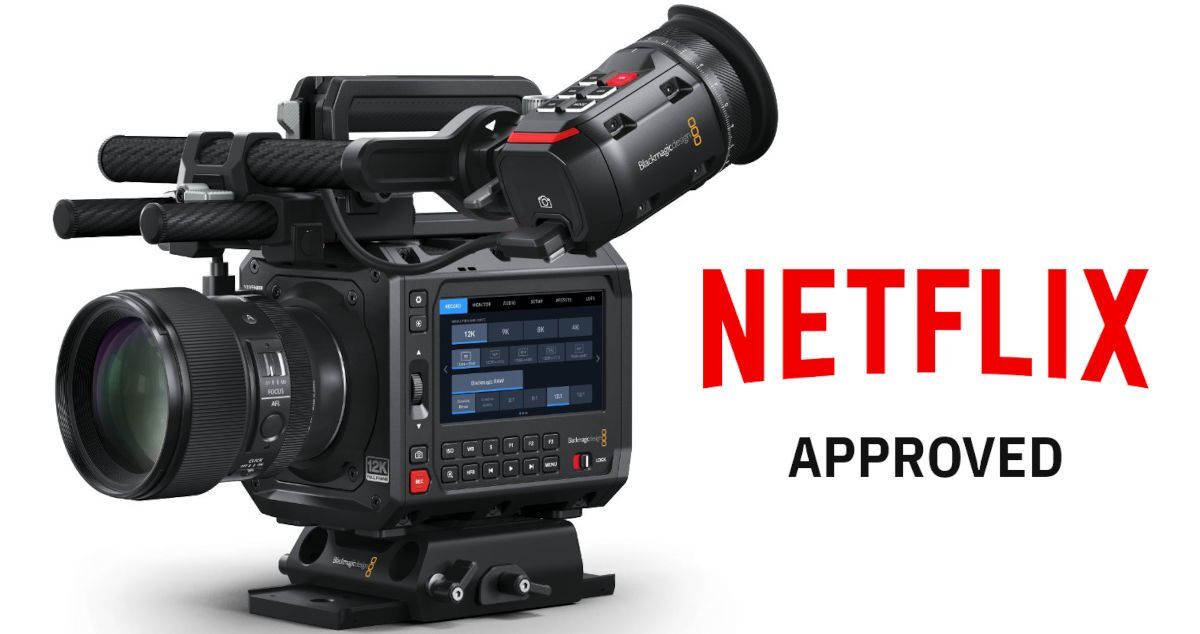
Blackmagic PYXIS 12K
Netflix requires that 90 percent of the final total runtime of a Netflix 4K Original be recorded with approved cameras (less stringent rules generally apply to non-fiction formats). The approved cameras have been tested by Netflix technicians to ensure they meet image capture requirements, such as dynamic range, color accuracy, detail reproduction, signal-to-noise ratio, resolution, and key workflow requirements.
Anyone wishing to shoot with a Netflix-certified camera must also adhere to certain recording specifications. For the PYXIS 12K, this means recording in Blackmagic RAW (up to 12:1), preferably to a CFexpress card. The dynamic range should be set to "Film" (alternatively, Wide Gamut).
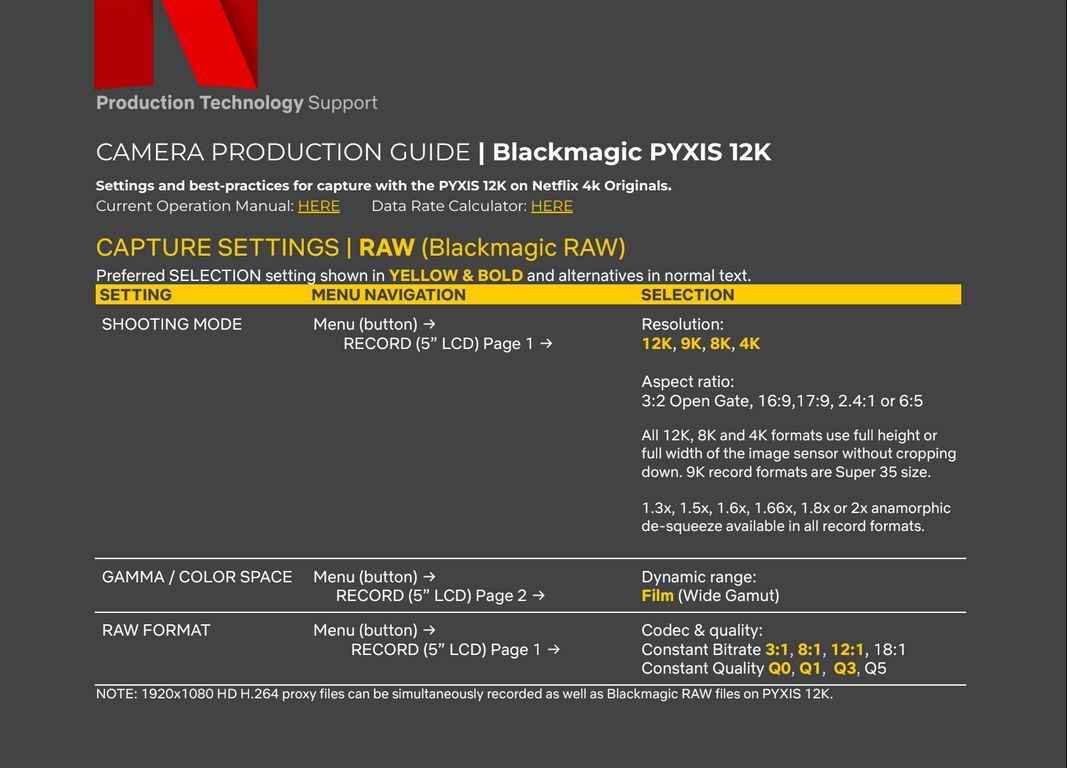
Settings recommended by Netflix
Furthermore, Netflix points out that while black shading is not required for the PYXIS 12K, a pixel recalibration should be performed after a factory reset, after a software update, or if newly appeared bright pixels become visible. The process takes about a minute and should be performed with the lens cap or body cap attached. The recalibration helps to re-align individual overactive pixels that appear brighter than others. Likewise, the "Calibrate Motion Sensor" option should be used to ensure precise gyro metadata for stabilization in post-production.
The Camera Production Guide for the Blackmagic PYXIS 12K, containing all recommended settings and best practices, can be found here: drive.google.com/file/d/1lMdd54nBh4toNvdGB970sCL10AmIA8Em/view.
And here is our  practical test of the Pyxis 12K as well as the lab test.