New superzoom camera: Sony RX10 V with AI focus tracking costs 2,499 euros
[17:21 Thu,9.July 2026 � by blip] ���
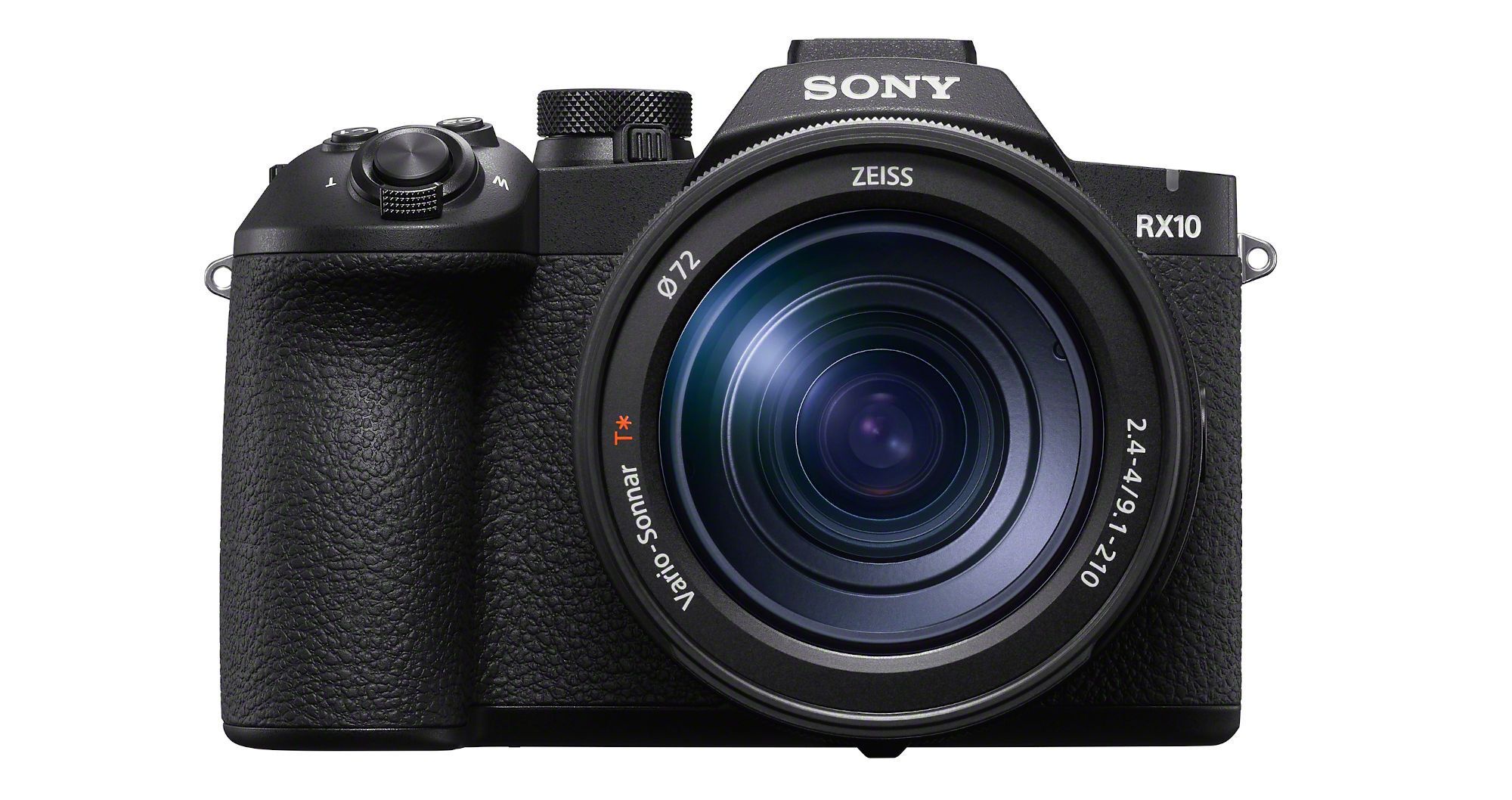
After years of a slump caused by smartphones, digital cameras are currently experiencing something of a small renaissance. And so, today, Sony is actually entering a new RX10 V into the race; its predecessor, the No. IV, was released 9 years ago. Externally, the compact bridge camera with a 25x optical zoom is barely recognizable, as the design and button layout of the body now lean more towards the current A7 series. Inside, however, it still runs on older hardware.
Sony RX10 V
As had been rumored in advance, Sony is not giving the RX10 V a new sensor; it uses the same 20MP 1.0-type CMOS as the predecessor from 2017. The ZEISS Vario-Sonnar T* 24-600mm (35mm equivalent) F2.4-4 zoom lens also remains unchanged. However, thanks to the Bionz XR image processor, which is accompanied by an AI chip, the superzoom RX10 V still offers tangible improvements.
For instance, the autofocus supports modern tracking options – the AI-supported real-time autofocus recognizes subjects such as humans, animals, birds, insects, cars, trains, or airplanes. The AI can also (as with other Alpha cameras) recognize human postures and thus track people even when they are being filmed from behind or their face is obscured by a helmet or sunglasses. Additionally, an automatic mode for subject recognition is available. The AI subject recognition also provides an auto-framing function, which is designed to automatically keep the main subject optimally in the frame.
Video recordings can now be captured in 4K at up to 120fps (S&Q mode, without audio recording), and even at 240fps in HD. S-Cinetone and S-Log3 are supported, and custom LUTs can also be loaded onto the camera (up to 16).
The RX10 V can be used for 4K live streaming at up to 30p. Image stabilization with Active Mode is intended to ensure steady footage.
In photo mode, the camera offers blackout-free continuous shooting at up to 30 frames per second, including AF/AE tracking. According to Sony, macro shots are possible from a distance of approx. 3cm at 24mm; in the maximum telephoto range, the minimum focusing distance is approx. 72cm.
The redesigned body features a new button layout as well as an ergonomically designed grip. The operation is modeled after the α series. The viewfinder is also new; it features a 0.5-inch Quad-VGA OLED panel with approx. 3.68 million dots and 0.78x magnification. The 3" display cannot be fully articulated.
The battery is also larger than before – the NP-FZ100 Z-series battery allows for up to 630 shots per charge, which is said to offer a more than 50 percent longer runtime compared to the predecessor model. Compatible microphones can be connected via the Multi Interface (MI) Shoe.
Price and Availability
The Sony RX10 V is expected to be available from mid-July for a hefty 2,499 euros.