






[14:08 Fri,17.April 2026 by blip] |
For NAB, RØDE is announcing the launch of its new MEMS-based microphone technology, Sonaura. With a signal-to-noise ratio (SNR) of 83dB and a self-noise level of just 11dBA, Sonaura is said to deliver a literally unheard-of level of clarity. This now makes professional broadcast quality possible in an extremely compact and highly robust design. 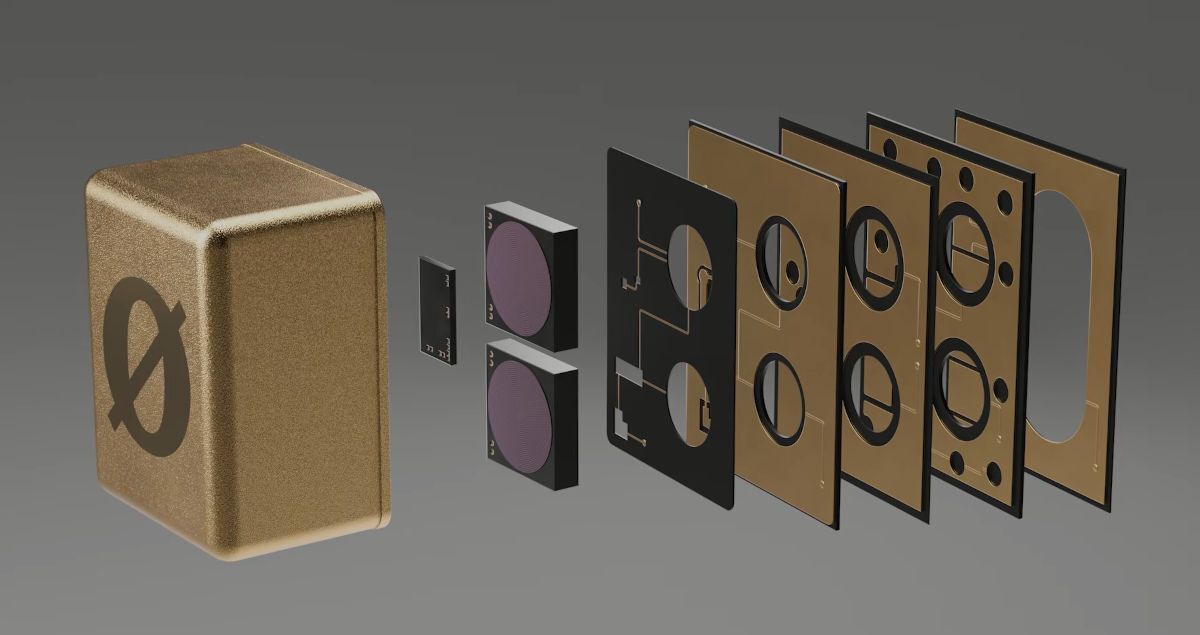 RØDE Sonaura Measuring just 4mm x 5mm and based on a newly developed low-noise ASIC, Sonaura is designed to integrate seamlessly into environments where high-quality audio was previously impossible, opening up new possibilities for broadcasting, film production, and content creation.
 MEMS-based microphones (Micro-Electro-Mechanical Systems) have, however, been under development and generally available for quite some time; the audio quality they can achieve is now steadily improving. MEMS microphones differ from conventional microphones primarily in their construction: instead of using traditional capsules, they are built around tiny silicon-based micro-electromechanical components and are usually combined with additional signal processing; the MEMS microphones used in RØDE Sonaura are manufactured by Infineon at its semiconductor plant in Germany.  With exceptional SPL handling, extremely high immunity to RF interference, and a very flat frequency response curve, Sonaura is intended to deliver flawless audio recordings in virtually any scenario, from controlled studio environments to unpredictable field productions. The latter in particular benefit from a highly rugged construction designed to withstand extreme conditions. Among other things, the sealed dual-diaphragm design is said to reduce sensitivity to physical shocks compared to conventional microphones. However, Sonaura is not making its debut in a RØDE product, but in Lectrosonics’ new L1 lavalier microphone (the company was acquired in 2025 by the Freedman Group, which also owns RØDE). The technology is also expected to find its way into selected next-generation RØDE products later this year. Lectrosonics L1 Subminiature Lavalier Microphone The Sonaura capsule used in the L1 replaces conventional FET-based designs with a patented encapsulated diaphragm. Unlike traditional capsules, which can vary considerably from batch to batch, the L1’s silicon manufacturing is said to deliver previously unattainable precision. Every L1 unit is claimed to be matched to within 0.5dB in both sensitivity and frequency response, giving production sound mixers and sound designers absolute repeatability across multiple microphones.  DJI Osmo Pocket 4 Creator Combo The L1 lavalier microphone features the excellent noise performance already mentioned above (EIN of just 11dB(A), signal-to-noise ratio of 83dB) and, when paired with the Lectrosonics DSSM transmitter, offers what is claimed to be the world’s first switchable sensitivity mode, allowing it to handle sound pressure levels of up to 135dB(A) SPL. The microphone is designed for a natural, uncolored sound that can be tailored via interchangeable acoustic caps (included) for either a flat or elevated high-frequency response. The L1 was developed for the harshest production environments and is said to be fundamentally impervious to moisture. According to the manufacturer, the combination of the inherent properties of the Sonaura capsule, a special hydrophobic internal coating, and hydrostatic pressure sealing via 0.4mm laser-drilled openings in the cap ensures that the microphone remains operational even when fully submerged.  more infos at bei rode.com more infos at bei rode.comdeutsche Version dieser Seite: RØDE Sonaura - kompakte MEMS-basierte Mikrofonkapseln mit SNR von 83dB, EIN 11dBA |
 |
|
|