






[15:54 Thu,23.July 2026 � by Thomas Richter] ��� |
Following
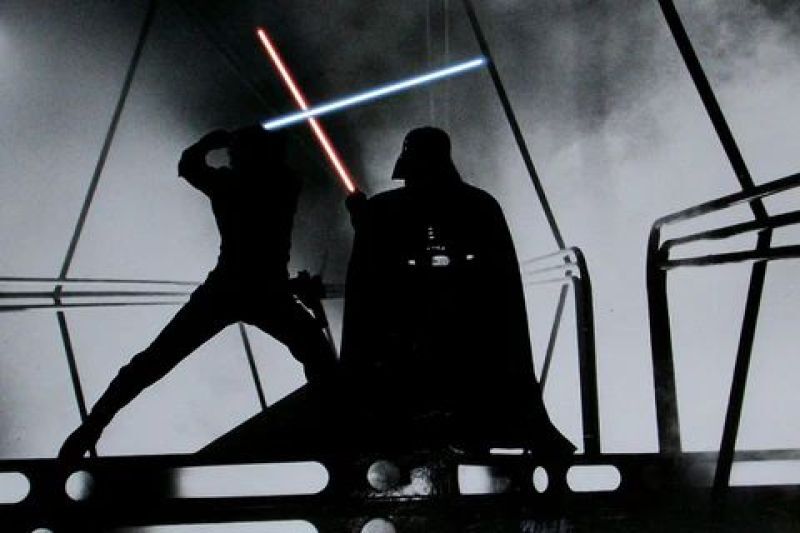 Lucas compares the objections of AI skeptics to clinging to the horse and buggy at the dawn of the automotive age, stating literally: "It’s like sitting here and saying, ‘Well, I think the horse and buggy is really the thing. These cars are going to break down, they need gas, there are all kinds of problems with them, and pretty soon they’re going to be turned into tanks, and then they’re going to kill people. It’s terrible.’" According to Lucas, the development cannot be stopped anyway—just like every other technical innovation before it: "You can’t do anything about it. That’s progress, that’s the future." At least Lucas is not entirely uncritical; when asked about potential manipulation, he argues that AI could also provide tools to detect forgeries and track their origin. Ultimately, humans remain responsible for any illegal or abusive use. Technology as a means to an endLucas’s positive stance on AI is not surprising. While some filmmakers view digital tools as a break with the tradition of cinema, he has always regarded technological changes as a natural evolution of moving images. Cinema is not a specific technique, but an idea, he explains in the interview.  This attitude has run through his entire career. Because established effects studios could not realize his vision for Star Wars, Lucas founded Industrial Light & Magic in 1975. Later, Lucasfilm pioneered computer-aided film editing, digital sound editing, CGI characters, virtual sets, and the use of digital cinema cameras, among other things. Through him, the Star Wars prequels became important precursors to a largely digital production method. By his own account, Lucas never wanted to run a technology company: he simply wanted the tools he needed. For him, technology was never an end in itself, but rather a way to enable images that otherwise could not be realized with existing production means, or only at great cost. Accordingly, he seems to view AI primarily as another way to bring a cinematic vision to the screen faster and more directly. But what does Lucas actually mean by AI?However, it remains unclear exactly what George Lucas understands by artificial intelligence in the context of film production. In the interview, he does not distinguish between assistive AI tools for editing, VFX, rotoscoping, or post-production and generative AI that creates scripts, storyboards, images, voices, or even entire video sequences. Furthermore, Lucas has not initiated a film project since his last film, "Star Wars: Episode III – Revenge of the Sith" from 2005—his statements should therefore be understood as a fundamental stance rather than a report on a concrete AI production. In recent years, Lucas has dedicated himself to building the Lucas Museum of Narrative Art in Los Angeles, which was also the occasion for the interview. Nevertheless, his enthusiasm for AI fits seamlessly into his career to date: where technology simplifies the realization of an idea, Lucas wants to use it. Ironically, the message from the creator of Star Wars to all AI skeptics can therefore be summarized with a famous line from another science fiction universe: Resistance is futile.  Performance capturing for digital avatars Lucas, Cameron, and the limits of AIIn his enthusiasm for technology, Lucas resembles James Cameron. The *Avatar* director has also repeatedly relied on new technology in film production, such as performance capture, virtual cameras, stereoscopic 3D, and digital worlds. Cameron also sees the potential in AI to reduce production costs and make processes more efficient. However, Cameron draws a clear line when it comes to the areas of application for AI. He rejects the idea of  replacing actors using prompts. Simply put, Lucas views AI as the next inevitable stage of the digital film revolution, but defends human performance and creative control more emphatically as central to innovative films. replacing actors using prompts. Simply put, Lucas views AI as the next inevitable stage of the digital film revolution, but defends human performance and creative control more emphatically as central to innovative films. Nolan warns of the transparent Trojan horseEven more skeptical is Christopher Nolan, whose Homer adaptation *The Odyssey*, filmed entirely in analog on IMAX film, has just been released in theaters. In a recent interview, he describes AI as a Trojan horse, though one where everyone knows the Greeks are hiding inside. It is practically transparent and made of glass. Nolan considers the pronounced distrust of many people, especially the younger generation, to be healthy. New technology can bring great benefits, but it must be viewed just as critically as the motives of the companies providing it.  Kane Parsons Backrooms Kane Parsons: Art must not be outsourced to AISurprisingly, the youngest successful director, Kane Parsons—who has just achieved a surprise blockbuster success as the creator of the "Backrooms" film—takes a particularly critical position toward AI. Parsons explicitly rejects generative AI in production. Instead, he had large parts of the *Backrooms* built as real sets and only supplemented areas that were impossible to build with classic VFX and Blender. Parsons sees art as a way to process one&s own life and personal experiences. Therefore, he sees no value in outsourcing parts of this process to a machine. Even a design decision made via generative fill—and ultimately arbitrary precisely because of that—could undermine his interest in a fictional world: if something is generated in one place without any narrative intent, it could eventually be the case everywhere. In view of the increasingly powerful AI tools in film production and at all levels, the discussion will likely continue, and given the growing presence of AI, it will probably become increasingly critical: it is clear that AI can help with many workflows, but also that cheaply produced "AI slop" threatens to flood all media.  �more infos at bei a-rabbitsfoot.com �more infos at bei a-rabbitsfoot.comdeutsche Version dieser Seite: George Lucas über KI: Widerstand ist zwecklos |
 |
|
|