







[16:22 Thu,3.March 2022 by Thomas Richter] |
Finally, the new
To that end, VESA is introducing new DP40 and DP80 UHBR cables. Cables labeled DP40 are guaranteed to support the UHBR10 standard of 10Gbps over four lanes for a total of 40Gbps, while those labeled DP80 support the UHBR20 standard (at up to 20Gbps) using four lanes for a total of 80Gbps. VESA-certified DP80 cables also support the UHBR13.5 connection rate (13.5Gbps), also defined by DisplayPort 2.0. ;) The new higher bandwidths enabled by UHBR support a variety of resolutions/refresh rates/data rates such as uncompressed 8K 60Hz HDR, 4K 240Hz HDR, and two 4K 120Hz HDR or four 4K 60Hz HDR displays using a single cable. Under the DisplayPort UHBR certification program, device and cable manufacturers can send new products to authorized DisplayPort test centers (ATCs) for testing and certification. According to VESA, several approved DP40 and DP80 cables (from manufacturers Accell, BizLink, and WIZEN) with FullSize DisplayPort and Mini DisplayPort connectors are already in production, and soon the first displays should also have successfully completed the certification process. 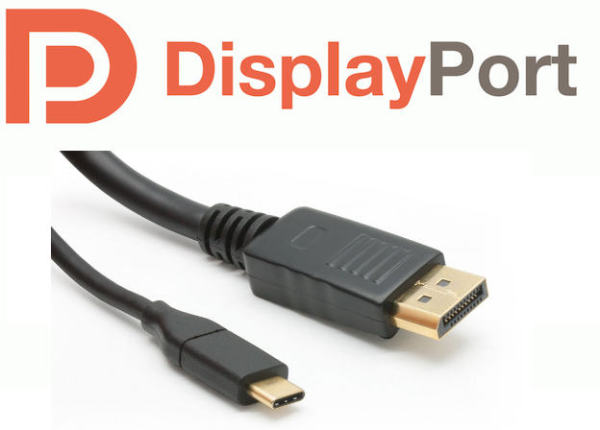 The new DP40 and DP80 cables are fully backward compatible with devices that support the previously defined and currently used DisplayPort connection rates, including RBR (Reduced Bit Rate), HBR (High Bit Rate), HBR2 and HBR3. For DisplayPort Alt Mode (DisplayPort over USB Type-C connector), full-featured passive USB-C cables already support UHBR bit rate speeds, while VESA-certified USB Type-C to DisplayPort converter cables that meet UHBR speed requirements will soon be available. VESA&s DP40 or DP80 certification, along with associated logos, is intended to prevent users from taking advantage of the performance promised by the new DisplayPort 2.0 standard because it is supported by the connected devices but not the cable. This problem affects many  for HDMI 2.1 certified devices which do not support some important features because they are only optional. for HDMI 2.1 certified devices which do not support some important features because they are only optional. 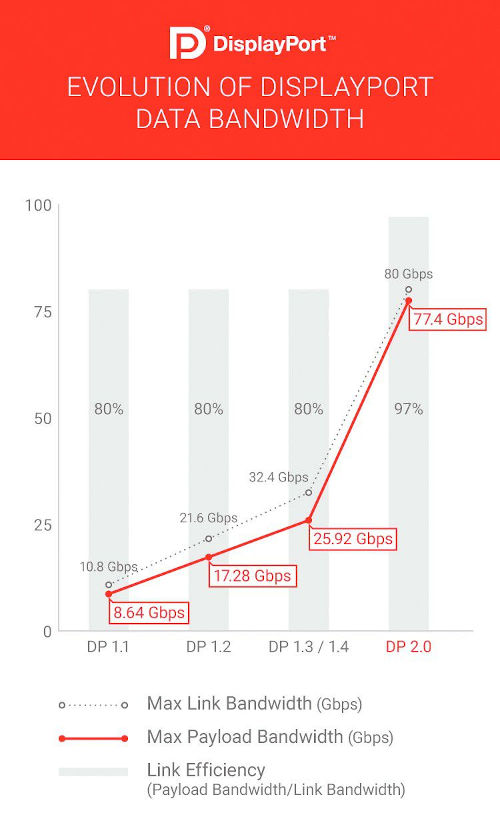 DisplayPort 2.0 vs HDMI 2.1The new DisplayPort 2.0 standard brings some improvements over the current 1.4a standard - for example, the data rate has been tripled from the previous 25.92 Gbit/sG to an effective 77.37 Gbit/s, which is sufficient for 8K playback at 60 Hz with 10-bit4:4:4t color depth, among other things. In addition, the DisplaPort 2.0 standard optionally includes compression of the monitor signals via DSC (which is already supported by some monitors via DisplayPort 1.4), which, in addition to higher resolutions and frame rates, also makes it possible to connect multiple displays in series. However, the delay of DisplayPort 2.0 has given a head start to the competing HDMI 2.1 standard, which already enables the display of 10K as well as 8K at 60Hz and 4K at 120Hz.  more infos at bei www.displayport.org more infos at bei www.displayport.orgdeutsche Version dieser Seite: DisplayPort 2.0 bekommt nach Geschwindigkeit spezifizierte Kabel um HDMI 2.1 Chaos zu vermeiden |
 |
|
|