For really convincingly immersive VR videos, there is a lack of display resolution in the dedicated headsets -- especially the recently announced model  HP Reverb in the USA is supposed to remedy this: with 2160 x 2160 per eye, it offers a significantly higher resolution than most other headsets. Two 2.89" LCD displays are installed, the field of view is 114°. MOtion Tracking is integrated (without further details). 6 Degrees of freedom are supported.
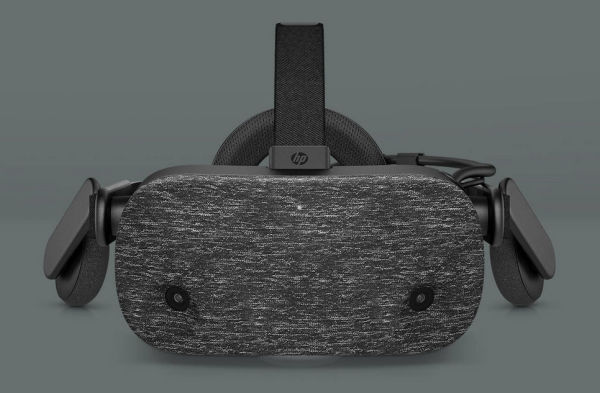
HP Reverb Virtual Reality Headset
Included are two Bluetooth motion controllers that automatically connect to the headset. Windows Mixed Reality and Steam VR are supported. The HP Reverb Virtual Reality Headset will be available in two versions from the end of April - a Pro Edition costs 649 dollars, the Consumer Edition 599 dollars (the only difference seems to be the missing 0.6m connection cable).
Almost at the same time the Oculus Rift S Headset was introduced, which seems to have been redesigned together with Lenovo. Compared to the old Rift, the resolution also increases a bit, to 1280 x 1440 pixels per eye; still less than the Oculus Quest with its 1440 × 1600. Instead of OLEDs, LC displays (like the Reverb) are now used. The frame rate drops from 90 to 80Hz. The field of view should be slightly larger than before. For position tracking, external sensors are no longer used, but insight tracking with integrated cameras (five in number; 6 DoF support). Thanks to the on-board cameras, it is now also possible to take a look at the real outside world (Passthrough+). The Oculus Rift S is expected to cost and be launched in the spring.
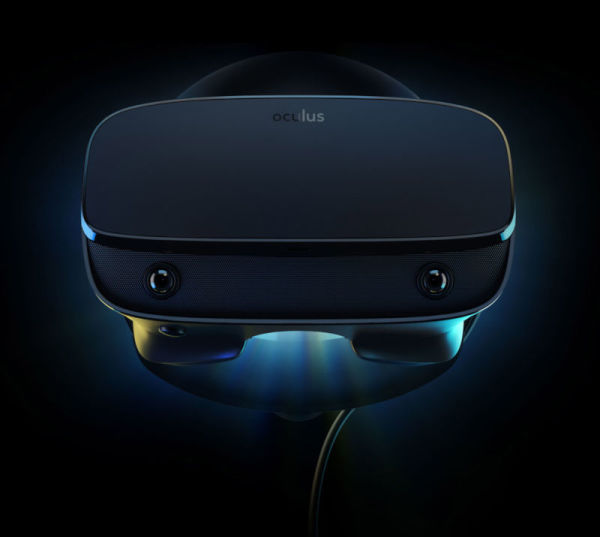
Oculus Rift S Headset








;)

;)